
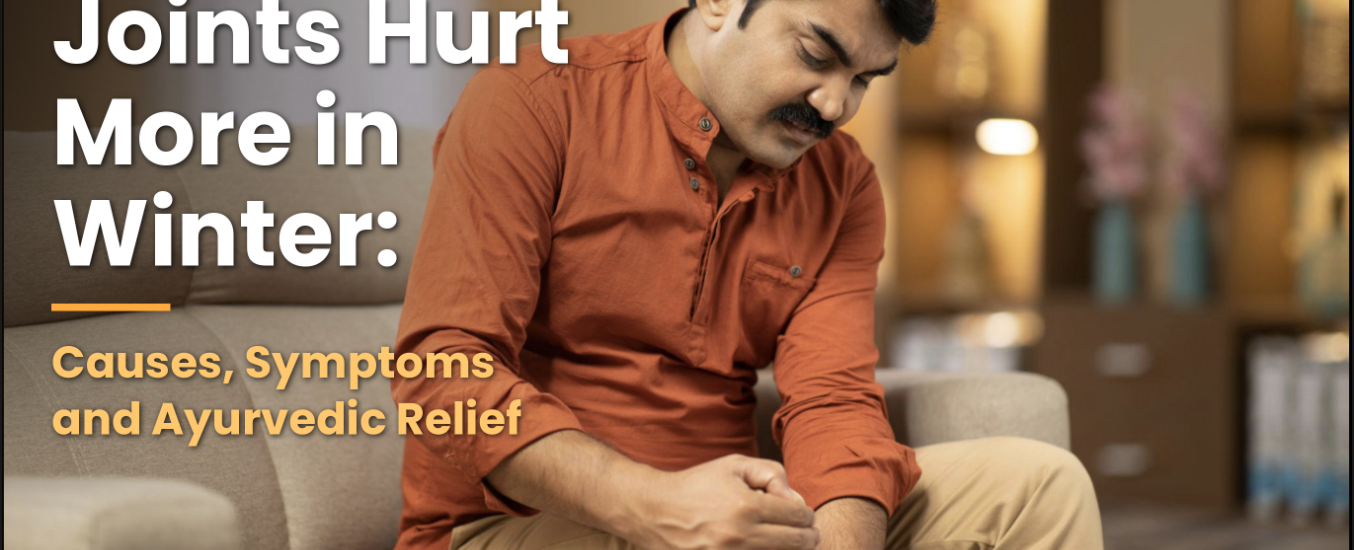
Do your knees hurt more during winter? Do your fingers feel stiff in the morning? You are not alone. Many people experience joint pain and stiffness when temperatures drop.
Winter joint pain can make everyday activities difficult. For example, walking, climbing stairs, and getting out of bed may become uncomfortable. However, understanding the causes can help you manage these symptoms.
In this blog, we explain why joint pain increases in winter. We also discuss common symptoms, preventive measures, and Ayurvedic approaches to joint health.
Why Does Joint Pain Increase in Winter?
Cold weather does not directly cause arthritis. However, winter conditions may make existing joint problems feel worse.
There are several possible reasons for increased joint discomfort during winter.
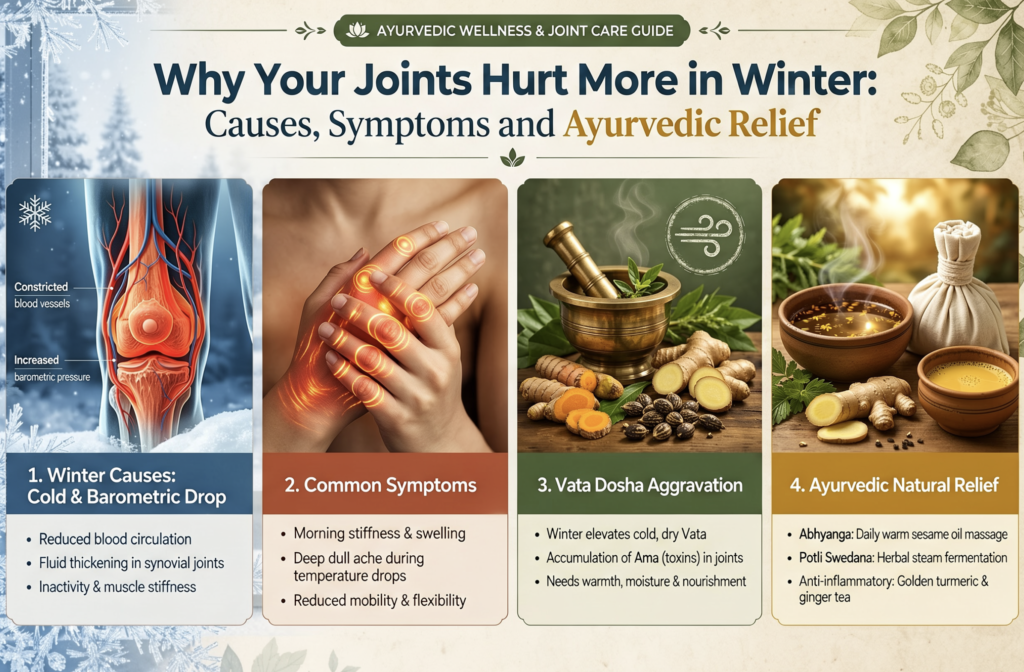
1. Cold Weather and Joint Stiffness
Cold temperatures can make muscles and surrounding tissues feel tighter. As a result, some people experience increased stiffness around their joints.
This discomfort is often noticeable in the morning. It may also occur after sitting for a long time.
2. Less Physical Activity
During winter, many people spend more time indoors. Consequently, their daily physical activity decreases.
However, regular movement is important for joint health. Without enough activity, muscles may become weaker and joints may feel stiffer.
Therefore, gentle walking and stretching can help maintain mobility.
3. Changes in Weather and Air Pressure
Changes in atmospheric pressure may affect how some people experience joint discomfort.
For instance, people with arthritis sometimes report increased pain during cold or damp weather.
However, scientific evidence about this connection remains mixed. Weather changes do not affect everyone equally.
4. Existing Arthritis Problems
People with osteoarthritis or rheumatoid arthritis may experience more noticeable symptoms during winter.
These conditions can cause joint pain, swelling, and stiffness. As a result, cold weather may make daily activities more challenging.
5. Poor Posture and Long Sitting Hours
Winter often encourages people to sit for longer periods. Unfortunately, prolonged sitting can contribute to stiffness and muscular discomfort.
For this reason, try to change your sitting position regularly. Also, take short movement breaks throughout the day.
Common Symptoms of Winter Joint Pain
Winter joint pain can affect different parts of the body. However, symptoms may vary from person to person.
Common symptoms include:
- Knee pain while walking or climbing stairs.
- Stiff fingers during the morning.
- Shoulder pain while lifting objects.
- Swelling around affected joints.
- Difficulty standing after sitting.
- Reduced joint flexibility.
- Muscle tightness and discomfort.
- Pain after long periods of inactivity.
If these symptoms continue, consult a qualified healthcare professional.
Which Joints Are Commonly Affected in Winter?
Different joints may experience discomfort during colder months.
Knee Joints
Knee pain is common among people with osteoarthritis. Walking, standing, and climbing stairs may become uncomfortable.
Finger and Hand Joints
Cold weather may make finger stiffness more noticeable. This can affect activities such as writing, cooking, and holding objects.
Shoulder Joints
Shoulder stiffness can make everyday movements difficult. For example, lifting your arms or getting dressed may become uncomfortable.
Hip Joints
Existing joint conditions and reduced physical activity may contribute to hip discomfort during winter.
Back and Neck
Long sitting hours and poor posture can increase muscular discomfort in the back and neck.
Ayurvedic Approach to Winter Joint Pain Relief
Ayurveda offers traditional approaches to supporting joint health. These include dietary guidance, lifestyle changes, massage, and individualised therapies.
In Ayurveda, joint discomfort and stiffness are often discussed in relation to Vata imbalance.
However, the right approach depends on the individual’s health condition. Here are some traditional practices that may support joint comfort.
1. Warm Oil Massage (Abhyanga)
Abhyanga is a traditional Ayurvedic oil massage practice.
Sesame oil is commonly used in traditional massage routines. A gentle massage may help promote relaxation and provide comfort to stiff muscles.
Potential benefits include:
- Relaxation of muscles.
- A feeling of warmth.
- Support for physical comfort.
- Improved relaxation and well-being.
However, avoid massaging joints that are hot, swollen, or severely painful without professional advice.
2. Follow a Healthy Winter Diet
A balanced diet supports overall health and normal body functions.
During winter, include nutritious foods in your daily routine.
Some healthy options include:
- Fresh seasonal vegetables.
- Fruits rich in vitamins.
- Almonds and walnuts.
- Whole grains.
- Protein-rich foods.
- Adequate water and fluids.
Additionally, ginger and turmeric are common ingredients in traditional Indian diets.
Remember, no single food can cure arthritis or joint pain.
3. Practise Gentle Yoga and Stretching
Regular physical activity helps maintain joint mobility and muscle strength.
You can try simple activities such as:
- Gentle knee movements.
- Ankle rotations.
- Light stretching.
- Short daily walks.
- Chair-based exercises.
Start slowly and avoid movements that increase pain. If you have an existing joint condition, ask your healthcare professional about suitable exercises.
4. Keep Your Joints Warm
Protecting your body from extreme cold may help improve comfort.
Follow these simple tips:
- Wear warm clothes during winter.
- Use knee warmers if needed.
- Keep your hands and feet covered.
- Take a comfortably warm shower.
- Avoid prolonged exposure to cold weather.
These small changes can make your winter routine more comfortable.
5. Consider Ayurvedic Therapies Under Professional Guidance
Ayurvedic healthcare includes traditional therapies that may be selected according to individual needs.
A qualified Ayurvedic practitioner can assess your health concerns and discuss suitable options.
However, Ayurvedic medicines and therapies are not suitable for everyone. Always discuss existing medical conditions and prescribed medicines before starting a new treatment.
7 Daily Tips to Maintain Healthy Joints During Winter
Small lifestyle changes can support better joint health.
- Start your morning with gentle stretching.
- Walk regularly according to your ability.
- Avoid sitting in one position for too long.
- Maintain a healthy body weight.
- Eat a balanced and nutritious diet.
- Get sufficient sleep.
- Keep your body warm during colder days.
Most importantly, stay consistent with your daily routine.
When Should You See a Doctor for Joint Pain?
Not all joint pain is caused by cold weather. Sometimes, discomfort may indicate an underlying medical condition.
Therefore, do not ignore persistent symptoms.
Consult a healthcare professional if:
- Joint pain continues for several days.
- Swelling occurs around a joint.
- You experience difficulty moving a joint.
- Pain affects your daily activities.
- You experience sudden or severe pain.
- A joint becomes red, hot, or swollen.
Seek urgent medical attention if a joint becomes suddenly hot and swollen, especially when accompanied by fever.
Early medical evaluation can help identify the cause and guide appropriate care.
Ayurvedic Healthcare Support at Sambhav Clinic, Meerut
Sambhav Clinic is an Ayurvedic healthcare and holistic wellness centre in Meerut.
We focus on understanding individual health concerns and providing guidance based on personal health needs.
People experiencing joint discomfort, stiffness, and other health concerns can consult our healthcare team to understand suitable care options.
Our healthcare approach includes:
- Individual health consultations.
- Ayurvedic healthcare guidance.
- Lifestyle and dietary recommendations.
- Holistic wellness support.
- Individualised care recommendations.
Every person has different health needs. Therefore, treatment suitability and outcomes may vary from person to person.
Ayurvedic care should complement appropriate medical evaluation. Do not stop prescribed medicines or delay necessary medical treatment.
Book Your Consultation at Sambhav Clinic
Are you experiencing joint stiffness or discomfort during winter?
Do not ignore persistent symptoms. Seek professional guidance and understand the available healthcare options.
Sambhav Clinic – Nurturing Health, Restoring Hope.
Website: https://sambhavclinic.com
Contact: +91 92594 20584 | +91 63955 66700
Address: Dream City Gate No. 2, Kanakhera, Meerut, Uttar Pradesh – 250001.
Frequently Asked Questions About Winter Joint Pain
1. Why do joints hurt more during winter?
Cold temperatures, reduced physical activity, and existing joint conditions may contribute to increased joint stiffness and discomfort during winter.
2. Can cold weather cause arthritis?
No. Cold weather does not directly cause arthritis. However, people with existing arthritis may experience more noticeable symptoms during colder months.
3. Can Ayurveda help with joint pain?
Ayurveda offers traditional approaches such as oil massage, dietary guidance, lifestyle changes, and individualised therapies. Their suitability depends on the underlying condition.
4. Which oil is traditionally used for joint massage?
Sesame oil is commonly used in traditional Ayurvedic massage practices. However, massage may not be suitable for swollen or acutely painful joints.
5. Is walking good for joint pain?
Yes. Gentle walking can help maintain mobility and strengthen supporting muscles. However, choose an activity suitable for your health condition.
6. How can I reduce knee stiffness during winter?
Gentle movement, suitable exercises, warm clothing, and maintaining a healthy weight may help manage knee stiffness.
7. When should I consult a doctor for joint pain?
Consult a healthcare professional if joint pain persists, swelling develops, or movement becomes difficult. Sudden severe pain or a hot, swollen joint requires urgent medical assessment.
Conclusion
Winter joint pain can affect your comfort and daily routine. However, healthy habits and timely medical guidance can help you manage joint discomfort.
Stay active, eat nutritious foods, protect your joints from extreme cold, and pay attention to persistent symptoms.
Ayurveda may offer supportive approaches to joint wellness when selected according to individual health needs.
For Ayurvedic healthcare guidance, connect with Sambhav Clinic, Meerut.
Take care of your joints today for a more comfortable tomorrow!