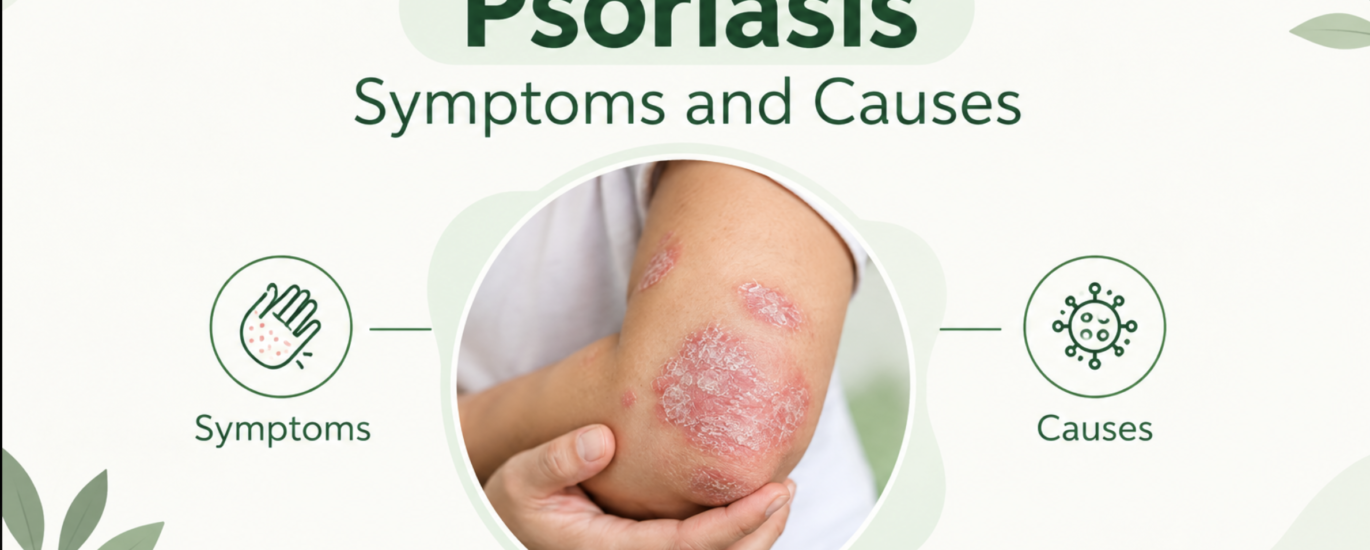
Psoriasis is a chronic skin condition that causes dry, itchy, and scaly patches. These patches commonly appear on the knees, elbows, scalp, and back. However, psoriasis can affect other parts of the body as well.
Understanding psoriasis symptoms can help you recognise possible signs of this condition. It can also help you understand when to seek medical advice.
Psoriasis develops when the immune system affects the normal growth of skin cells. As a result, skin cells build up on the surface and form thick patches.
Although psoriasis has no permanent cure, several treatments can help control symptoms. With appropriate medical care, many people can manage the condition and improve their quality of life.
What Is Psoriasis?
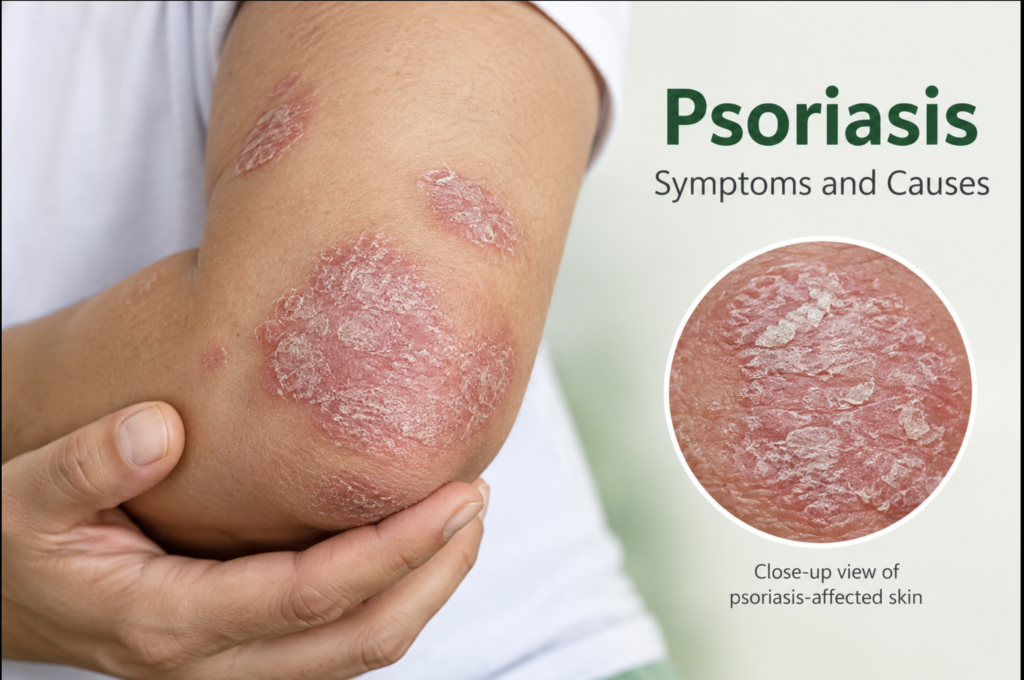
Psoriasis is a long-term inflammatory skin disease. It causes skin cells to grow and accumulate faster than usual.
Normally, the body replaces old skin cells gradually. However, psoriasis speeds up this process. Consequently, thick, dry, and scaly patches can develop.
Symptoms may improve for a while and then return. These periods of worsening symptoms are called flare-ups.
Psoriasis is not contagious. Therefore, you cannot catch it through touching someone who has the condition or sharing everyday items with them.
Common Psoriasis Symptoms
The symptoms of psoriasis vary from person to person. Some people develop a few small patches, while others experience more widespread skin changes.
Common signs include:
- Dry skin: Affected areas may become rough, thick, and flaky.
- Itching: The patches may feel itchy or irritated.
- Scaly patches: Skin may develop white or silvery scales.
- Skin inflammation: Affected areas may look red, pink, purple, or darker than the surrounding skin.
- Cracked skin: Severe dryness can cause painful cracks and bleeding.
- Nail changes: Nails may become thick, discoloured, pitted, or separated from the nail bed.
Psoriasis can look different on different skin tones. Therefore, a healthcare professional should assess persistent skin changes.
What Causes Psoriasis?
The exact cause of psoriasis is not fully understood. However, researchers know that immune system activity and genetics play important roles.
1. Immune System Changes
Psoriasis involves an abnormal immune response. This response causes inflammation and speeds up skin cell production.
As a result, skin cells accumulate on the surface. This buildup creates the thick, scaly patches associated with psoriasis.
2. Family History
Genetics can increase the risk of developing psoriasis. People with a parent or close family member who has psoriasis may have a higher risk.
However, having a family history does not mean you will definitely develop the condition.
3. Environmental Factors
Environmental factors may trigger psoriasis in people who are susceptible to it. These triggers can differ from one person to another.
Understanding your personal triggers may help you manage flare-ups more effectively.
Common Psoriasis Triggers
Certain factors can make psoriasis symptoms worse. Identifying these triggers is an important part of managing the condition.
Stress
Stress may worsen psoriasis in some people. For this reason, relaxation techniques, regular exercise, and adequate sleep may help support overall well-being.
Infections
Some infections, including strep throat, can trigger psoriasis or cause existing symptoms to worsen.
If you notice a flare-up after an infection, speak with your healthcare professional.
Cold and Dry Weather
Cold weather and low humidity can dry out the skin. Consequently, psoriasis may become more uncomfortable during winter.
Applying a suitable moisturiser can help reduce dryness and protect the skin.
Skin Injuries
Cuts, scratches, insect bites, and sunburn may trigger new psoriasis patches in some people.
Therefore, protect your skin from injuries and avoid scratching affected areas.
Certain Medicines
Some medicines can trigger or worsen psoriasis. The risk depends on the medicine and your individual health.
If your symptoms change after starting a new medicine, consult your doctor. Do not stop prescribed medication without medical advice.
Smoking and Alcohol
Smoking and heavy alcohol consumption may worsen psoriasis in some people.
Avoiding tobacco and limiting alcohol can support your overall health.
What Are the Different Types of Psoriasis?
Psoriasis has several forms. Each type affects the skin differently.
1. Plaque Psoriasis
Plaque psoriasis is the most common type. It causes raised, dry patches covered with scales.
These patches often appear on the knees, elbows, scalp, and lower back.
2. Guttate Psoriasis
Guttate psoriasis causes small, scaly spots on the skin. It is more common in children and young adults.
Sometimes, it develops after a throat infection.
3. Inverse Psoriasis
Inverse psoriasis affects skin folds, such as the armpits, groin, and area beneath the breasts.
It usually causes smooth, inflamed patches. Sweat and friction may make the affected areas more uncomfortable.
4. Nail Psoriasis
Nail psoriasis affects the fingernails or toenails. Common signs include pitting, thickening, discolouration, and separation from the nail bed.
However, other conditions can cause similar nail changes. Therefore, seek medical advice for an accurate diagnosis.
5. Pustular Psoriasis
Pustular psoriasis causes pus-filled bumps surrounded by inflamed skin. It may affect a small area or a larger part of the body.
Widespread pustules, fever, or rapidly worsening symptoms require urgent medical attention.
How Is Psoriasis Diagnosed?
A doctor usually diagnoses psoriasis by examining the skin, scalp, and nails.
The doctor may also ask about your symptoms, family history, recent infections, and medicines.
Sometimes, a small skin sample is needed to confirm the diagnosis or rule out other skin conditions.
Seek medical advice if your skin patches persist, spread, crack, bleed, or cause significant discomfort.
What Are the Treatment Options for Psoriasis?
Psoriasis treatment aims to reduce inflammation, control scaling, and relieve itching. The right treatment depends on the severity of the condition and the areas affected.
A dermatologist may recommend one or more of the following options.
1. Topical Treatments
Topical treatments are applied directly to the skin. They are commonly used for mild to moderate psoriasis.
Depending on your symptoms, a doctor may recommend:
- Moisturisers to reduce dryness.
- Corticosteroid creams to control inflammation.
- Vitamin D-based creams to slow skin cell growth.
- Medicated shampoos for scalp psoriasis.
Use these products according to medical advice, particularly on the face and other sensitive areas.
2. Phototherapy
Phototherapy uses controlled ultraviolet light to treat psoriasis.
A dermatologist may recommend this option when psoriasis affects larger areas or does not respond adequately to topical treatments.
However, unsupervised ultraviolet exposure is not a safe substitute for medical phototherapy.
3. Oral and Injectable Medicines
Some people need prescription medicines that work throughout the body. These treatments may be recommended for moderate to severe psoriasis.
A doctor will consider the benefits, possible side effects, and need for monitoring before recommending a medicine.
4. Daily Skin Care
Good skin care can help reduce dryness and irritation. Although these measures do not cure psoriasis, they may support symptom management.
Helpful habits include:
- Apply a fragrance-free moisturiser regularly.
- Take lukewarm showers instead of very hot showers.
- Use gentle skin cleansers.
- Avoid scratching or picking at affected patches.
- Identify and avoid personal triggers where possible.
- Maintain a regular sleep schedule.
- Manage stress through healthy daily activities.
If symptoms continue despite these measures, consult a dermatologist.
Can Ayurveda Help With Psoriasis?
Some people consider Ayurveda or other complementary approaches to support their skin care.
However, scientific evidence for Ayurvedic treatments specifically for psoriasis remains limited. Therefore, no Ayurvedic remedy should be presented as a proven cure.
Some herbal products may cause allergic reactions or interact with prescribed medicines. Certain products may also contain ingredients that can harm the liver or kidneys.
If you are considering Ayurvedic care, speak with a qualified healthcare professional. Tell them about all medicines, supplements, and skin products you use.
Most importantly, do not stop prescribed treatment or delay medical care in favour of an unproven remedy.
When Should You See a Doctor?
Consult a healthcare professional if you notice persistent or worsening skin symptoms.
You should seek medical advice if:
- Your skin develops thick, scaly patches.
- Itching interferes with sleep.
- Your skin cracks or bleeds repeatedly.
- The rash spreads to new areas.
- Your nails develop unusual changes.
- Your symptoms do not improve with treatment.
Also, pay attention to joint symptoms. Psoriasis can occur alongside psoriatic arthritis, which causes joint pain, swelling, and stiffness.
Early assessment can help prevent lasting joint damage.
Seek urgent medical care if you develop widespread skin redness, extensive pus-filled bumps, fever, or rapidly worsening symptoms.
Frequently Asked Questions About Psoriasis
1. What are the first symptoms of psoriasis?
Early symptoms may include dry, itchy patches or small scaly spots. However, symptoms vary depending on the type of psoriasis and the person’s skin tone.
2. Is psoriasis contagious?
No. Psoriasis is not contagious. It cannot spread through touching, hugging, or sharing clothes.
3. Can psoriasis be cured permanently?
There is currently no permanent cure for psoriasis. However, appropriate treatment can control symptoms and help some people experience periods of improvement.
4. What triggers psoriasis flare-ups?
Common triggers include stress, infections, skin injuries, cold weather, and certain medicines. Smoking and heavy alcohol consumption may also worsen symptoms.
5. Can psoriasis affect the nails?
Yes. Nail psoriasis can cause pitting, thickening, discolouration, and separation from the nail bed.
6. Can psoriasis cause joint pain?
Psoriasis may occur alongside psoriatic arthritis. If you experience persistent joint pain, swelling, or stiffness, seek medical assessment.
7. What is the best treatment for psoriasis?
There is no single treatment that works best for everyone. A dermatologist can recommend suitable creams, phototherapy, or prescription medicines based on your condition.
Conclusion
Psoriasis is a chronic skin condition that causes dry, itchy, and scaly patches. Although its exact cause is not fully understood, immune system changes, genetics, and environmental triggers play important roles.
Recognising psoriasis symptoms can help you seek medical advice at the right time. Furthermore, appropriate treatment and regular skin care can help manage flare-ups.
If you have persistent skin changes, consult a qualified healthcare professional for an accurate diagnosis and personalised treatment plan.
Medical disclaimer: This article is for educational purposes only. It does not replace professional medical advice, diagnosis, or treatment.